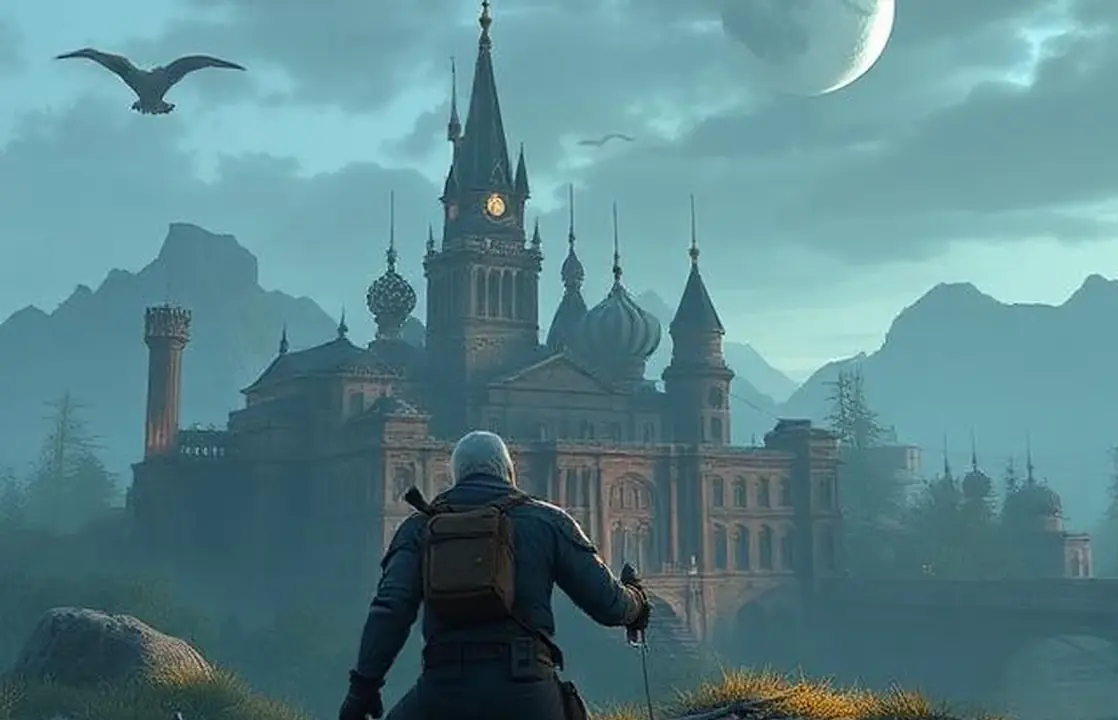
A living world does not need to simulate every leaf, villager and weather pattern. It needs something more important: the feeling that the place has habits. Creatures travel along routes. NPCs react to danger. A village has a morning rhythm and a nighttime silence. A forest sounds different after rain. These details make players believe the world exists beyond the camera.
That belief changes how we play. We stop treating the map as a checklist and start treating it as a place. A distant tower becomes a question. A road becomes a promise. Even a quiet corner can feel meaningful because the world has taught us that something might happen there.
Systems create trust
When players understand how a world behaves, they begin to trust it. If fire spreads, sound attracts enemies, weather changes visibility, and animals react to movement, the game becomes readable. Not easy — readable. That difference matters. Readable worlds let players create plans and feel responsible for the results.
The best ecosystems do not show off complexity. They quietly give players enough rules to tell their own stories.
Small reactions beat huge maps
A massive world can feel empty if it never responds. A smaller space can feel enormous when it remembers your actions. A repaired bridge, a safer path, a merchant who moves after a quest, or a creature that disappears from an overhunted area can do more for immersion than another square kilometer of terrain.
That is why the most convincing worlds often come from careful repetition. You learn the sound of a safe camp. You notice when the music holds back. You recognize a shortcut before the game labels it. The environment starts speaking in patterns.
Why this stays with us
Players remember systems when those systems create emotion. A sudden storm that saves you from a patrol becomes a story. A village that lights its windows at dusk becomes a place you want to protect. A monster that hunts by sound turns every broken branch into a decision.
Living ecosystems make games unforgettable because they make discovery feel personal. The world is not just waiting to be consumed. It is moving, breathing and asking you to pay attention.
Want a softer kind of survival?
Read our second longread about cozy survival games and why rebuilding can feel more powerful than destruction.
Read next